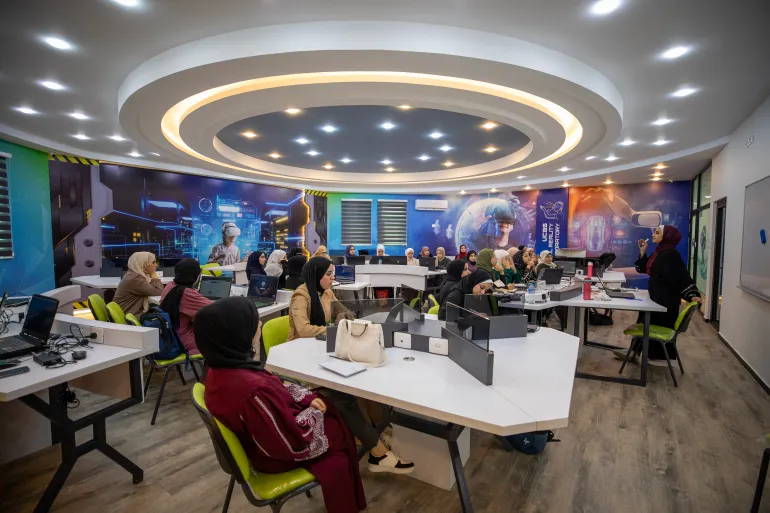
A Gaza technology incubator continues supporting innovation and entrepreneurship despite massive destruction caused by the ongoing war and economic collapse.
The ongoing war in Gaza has devastated nearly every aspect of life in the territory, destroying homes, infrastructure, businesses, and public services. Among the sectors heavily affected is Gaza’s once-growing technology and entrepreneurship industry.
For years, technology startups and innovation centres provided opportunities for thousands of young Palestinians facing high unemployment and restrictions caused by the long-standing blockade on Gaza. Today, much of that progress has been wiped out by continued violence and economic collapse.
One of the institutions most severely damaged is the UCAS Technology Incubator, linked to the University College of Applied Sciences (UCAS) in Gaza City’s Tal al-Hawa neighbourhood.
Before the war, the incubator served as a major hub for entrepreneurship, innovation, and digital startups. It supported young developers, designers, and business owners by providing training, mentorship, and workspaces aimed at helping graduates build careers in the technology sector.
However, the incubator’s headquarters and facilities were destroyed during Israeli attacks in August 2024 that targeted the surrounding college campus.
Despite the destruction, staff members and entrepreneurs connected to the incubator continue attempting to rebuild operations and support Gaza’s struggling technology community.
The war has severely damaged Gaza’s economy, leaving many businesses unable to function and forcing thousands of professionals out of work. Frequent power shortages, internet disruptions, displacement, and the destruction of office spaces have made it increasingly difficult for startups and technology companies to survive.
Technology had previously become one of the few sectors in Gaza capable of connecting young professionals to international markets through remote work and online services.
Entrepreneurs in Gaza say the collapse of the sector represents more than economic damage. Many view it as the loss of one of the few remaining sources of hope for young people seeking opportunities despite years of conflict and restrictions.
Even under extremely difficult conditions, some developers, students, and startup founders continue working remotely or from temporary locations whenever internet access and electricity allow.
Observers say Gaza’s technology sector demonstrated resilience before the war, but recovery will likely require major reconstruction efforts, investment, and long-term stability once the conflict ends.
For now, institutions like the UCAS Technology Incubator remain symbols of determination amid destruction, as young Palestinians attempt to preserve innovation and opportunity despite the ongoing crisis.