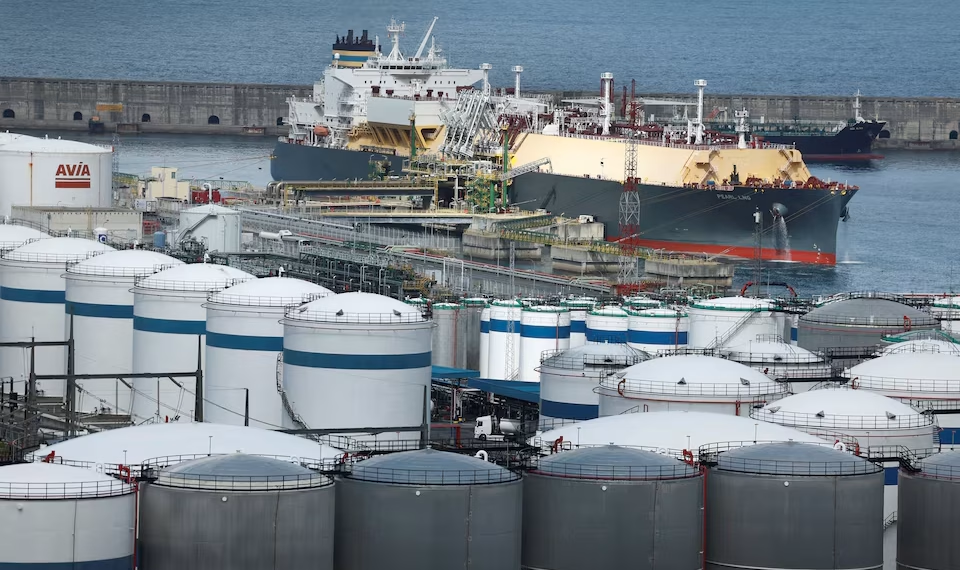
Uniper warns LNG prices could increase further due to supply disruptions, Asian heatwaves, and European storage demand as global energy markets remain volatile.
Global liquefied natural gas (LNG) prices may continue rising as ongoing supply disruptions, strong Asian demand, and Europe’s storage requirements increase pressure on energy markets, according to a senior executive at energy company Uniper.
Speaking at the S&P Global Energy Middle East Petroleum and Gas Conference in London on Wednesday, Uniper Middle East chief executive John Roper said the LNG market could face even greater volatility in the coming months.
Roper explained that current disruptions linked to tensions involving Iran have already affected LNG supply chains, with Asian countries outside China experiencing the biggest impact so far. He added that market pressure could intensify if supply shortages combine with hotter weather across Asia and Europe’s efforts to refill gas storage reserves before winter.
According to Roper, damage to energy infrastructure and concerns surrounding the Strait of Hormuz have removed much of the expected LNG supply growth planned for 2025 and 2026. He warned that the effects of these disruptions may continue to influence global markets until at least 2030.
Despite the short-term uncertainty, Roper said several new LNG projects expected to begin operations between 2027 and 2028 could help stabilize the market over the medium term.
Market data from LSEG showed Asian LNG prices have jumped around 75% compared to levels seen before the recent regional conflict. Prices currently stand near $18.20 per mmBtu.
Earlier this year, LNG prices surged to approximately $25.30 per mmBtu following an Iranian strike targeting Qatar’s Ras Laffan LNG facility. However, prices remain significantly lower than the record highs reached in August 2022, when LNG costs climbed above $70 per mmBtu after Russia’s invasion of Ukraine caused a major global energy crisis.
Energy analysts continue to monitor geopolitical tensions, shipping routes, and weather conditions closely, as all three factors are expected to play a major role in determining LNG market trends over the next several years.