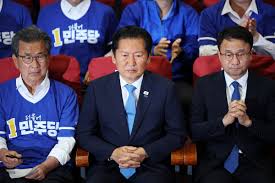
South Korea’s ruling Democratic Party secured major victories in local elections but failed to reclaim the key Seoul mayor position from the conservative opposition.
South Korean President Lee Jae Myung’s ruling Democratic Party achieved major gains in nationwide local elections held on Wednesday, winning most of the country’s key mayoral and provincial races.
Despite the strong nationwide performance, the party suffered a significant symbolic setback after conservative candidate Oh Se-hoon secured another term as mayor of Seoul, the country’s capital and most politically influential city.
According to election results, the Democratic Party won 12 out of 16 major mayoral and provincial contests across South Korea. The opposition conservative People Power Party managed to win four races.
The outcome strengthens President Lee’s political influence one year into his presidency and gives his party broader control over local governments nationwide. However, losing Seoul prevents the ruling party from fully consolidating political power in the country’s most important urban center.
Seoul’s mayoral race had been closely watched because of its political significance and its role in shaping national public opinion. Analysts say the result provides conservatives with a critical foothold as they attempt to recover from the political fallout surrounding former President Yoon Suk Yeol’s failed martial law attempt in 2024 and his later impeachment.
Speaking on the anniversary of his inauguration, President Lee said his administration would respect the election outcome and cooperate with local governments regardless of political affiliation.
Democratic Party leader Jung Chung-rae described the nationwide results as a major victory but admitted disappointment over the loss of Seoul.
Meanwhile, Seoul Mayor Oh Se-hoon celebrated his re-election by saying voters had supported democratic balance and prevented political power from becoming concentrated within one party.
Political experts noted that housing concerns in Seoul may have influenced voter behavior. Rising property prices and dissatisfaction with government housing measures reportedly played an important role during the campaign.
Even with the setback in the capital, the Democratic Party achieved notable victories elsewhere, including Busan, South Korea’s second-largest city and traditionally a conservative stronghold.
Analysts say President Lee’s continued popularity has been supported by strong export performance, particularly due to growing global demand for artificial intelligence chips, as well as gains in the country’s stock market.
Before the elections, the opposition People Power Party controlled most of the major local governments, making the ruling party’s latest gains a significant political shift ahead of future national contests.