Health experts warn dengue is becoming a year-round threat in India as rising temperatures and changing weather patterns fuel earlier outbreaks.
When Nitin Sharma developed a high fever in May, dengue was not something he expected.
Like many people in India, the 32-year-old software engineer from Gurugram believed dengue was mainly a monsoon disease that appeared during heavy rains and faded once the season ended.
After suffering headaches, body pain and severe fatigue, Sharma visited a private hospital expecting doctors to diagnose a common viral illness.
Instead, blood tests confirmed he had dengue fever.
“What shocked me most was the timing,” Sharma said after spending nearly two weeks recovering from weakness and exhaustion. “Earlier, dengue was something we only worried about during the monsoon.”
Dengue cases appearing earlier than usual
Doctors and health experts across India say such cases are becoming increasingly common.
Hospitals in several states reported dengue infections weeks before the monsoon officially reached Kerala this year, raising concerns that the disease is no longer restricted to a seasonal outbreak pattern.
Health specialists say rising temperatures, irregular rainfall, urban expansion and changing climate conditions are allowing dengue-carrying mosquitoes to survive for longer periods and spread more widely.
“Dengue is no longer limited to the post-monsoon period,” said Dr Harshdeep Joshi, head of Community Medicine at Maharishi Markandeshwar Medical College and Hospital in Haryana.
Shift in traditional disease patterns
For decades, dengue outbreaks in India followed a predictable cycle. Cases usually increased during the monsoon, peaked shortly after heavy rainfall, and then declined as temperatures cooled.
Experts now say that pattern is changing.
Even before this year’s monsoon began, hospitals in multiple cities recorded rising numbers of suspected dengue patients.
According to data from India’s National Center for Vector Borne Diseases Control (NCVBDC), the country recorded 6,927 dengue cases by the end of February 2026.
Health experts note that the figure is unusually high for the early part of the year.
By comparison, studies linked to NCVBDC data showed:
- 6,837 dengue cases were recorded during the entire January–May period in 2021
- 10,172 cases were reported during the same period in 2022
Researchers say the latest numbers suggest dengue transmission is starting earlier and continuing for longer periods than before.
Southern states reporting highest infections
The southern Indian state of Tamil Nadu has recorded the highest number of infections this year, followed by Maharashtra, Kerala and Karnataka.
Experts say warmer climates in southern regions create ideal conditions for mosquitoes to breed over extended periods.
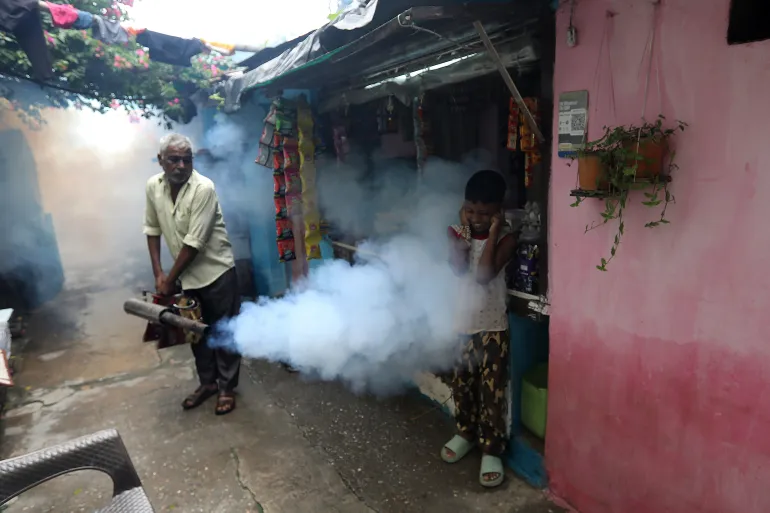
Urbanisation is also contributing to the spread. Rapid construction, poor drainage systems and water storage practices in densely populated cities provide breeding grounds for mosquitoes carrying dengue.
Climate change and public health concerns
Scientists increasingly link the rise in early dengue outbreaks to climate change.
Higher temperatures can speed up mosquito breeding cycles and shorten the time required for the virus to develop inside mosquitoes, increasing transmission risks.
Erratic rainfall patterns also create stagnant water pools that help mosquito populations grow even outside traditional monsoon months.
Public health experts warn that India may need to rethink its dengue prevention strategy, moving from seasonal emergency responses to year-round monitoring and mosquito control efforts.
They say awareness campaigns, improved sanitation, early diagnosis and stronger urban planning will become increasingly important as dengue evolves into a more persistent public health threat across the country.