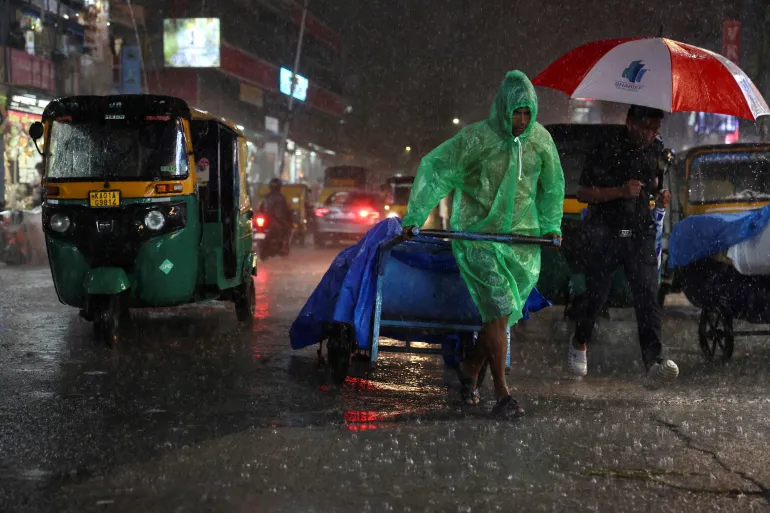
India’s monsoon season has reached Kerala three days later than usual, easing concerns over crop production and economic impact despite El Nino warnings.
India’s annual monsoon season has officially reached the southern state of Kerala, arriving three days later than usual but still within a timeframe considered important for the country’s farming sector.
The India Meteorological Department confirmed on Thursday that the southwest monsoon had entered Kerala and said weather conditions remain favorable for the rains to spread further across the country over the coming days.
The monsoon season normally begins around June 1 and plays a vital role in India’s economy and food production. Farmers across the country depend heavily on seasonal rainfall to plant and grow crops such as rice, cotton, corn, sugarcane, and soybeans.
India’s economy, valued at around $4 trillion, relies significantly on the monsoon because the rainy season provides nearly 70 percent of the rainfall needed for successful agricultural production.
Beyond farming, monsoon rains are also critical for replenishing water reservoirs, groundwater supplies, and hydroelectric resources across many regions.
Meteorological officials said the rains are expected to advance into additional areas, including Goa, Maharashtra, Andhra Pradesh, Tamil Nadu, and parts of the Arabian Sea region within the next two to three days.
Last month, concerns grew after weather experts warned that the 2026 monsoon season could be weakened by the El Nino climate pattern. Forecasts suggested India might experience its driest monsoon season in more than a decade if the weather phenomenon intensified.
The World Meteorological Organization recently stated there is an 80 percent chance of El Nino conditions developing between June and August.
El Nino is known for warming ocean surface temperatures in the Pacific and often causes extreme weather patterns, including heatwaves, droughts, and irregular rainfall in different parts of the world.
United Nations Secretary-General Antonio Guterres also warned this week that El Nino poses a serious climate threat, saying the world should treat it as an urgent warning linked to rising global temperatures and worsening weather extremes.
Despite the delayed arrival, the start of the monsoon in Kerala has provided some relief to farmers, policymakers, and markets concerned about crop yields, food prices, and economic stability in the months ahead.